Rosehip Branch with Flowers: A Designer’s Review
When I first pulled up the Rosehip Branch with Flowers on my screen, I wasn’t looking for flashiness. As a designer who has spent years tweaking digitized files for client apparel and boutique home goods, I look for clarity, balance, and stitch efficiency. This design, categorized under Bouquets, immediately struck me as a piece that understands the quiet elegance of nature. It is not overly complex, yet it carries enough visual weight to stand alone as a focal point on a garment or home accessory.
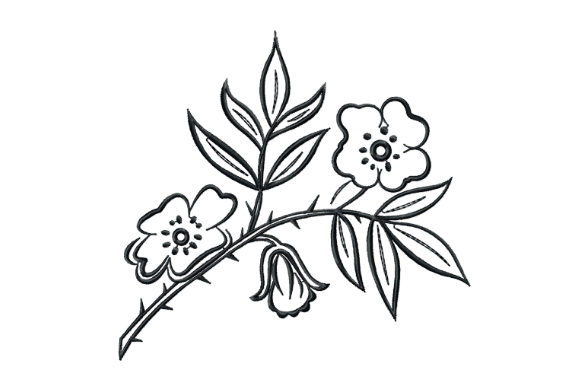
The description notes that this is a plain satin stitch machine embroidery design. For those of us in the trade, "plain satin stitch" can sometimes raise a flag regarding density and coverage, but in this context, it suggests a clean, classic finish. The motif features a branch of wild rose, complete with large thorns and delicate flowers. This combination of rugged thorns and soft petals creates a compelling visual tension that appeals to modern aesthetics. It feels grounded and real, rather than whimsical or cartoonish, which broadens its appeal significantly for commercial use.
First Impressions and Visual Mood
The layout of the Rosehip Branch with Flowers is organic. It does not feel rigidly symmetrical, which is a major plus for contemporary design trends. The branch curves naturally, suggesting movement and growth. When evaluating an embroidery file, I always look at how the elements flow together. Here, the thorns are prominent, adding an edge to the otherwise floral theme. This makes the design suitable for a wider demographic than typical floral patterns. It works just as well on a rustic kitchen towel as it does on a modern denim jacket.
The detail level is moderate. It is intricate enough to be interesting from a distance but simple enough to stitch out quickly without excessive thread breaks or jump stitches. For a small shop product or an Etsy seller managing high volume, this balance is crucial. You want a design that looks premium but doesn’t tie up your machine for hours per unit.
Real-World Application: The Tote Bag Test
To truly evaluate a design, I mentally place it on various substrates. Let’s consider a custom embroidered tote bag. Canvas is a popular choice for handmade products, but it has a distinct texture. A satin stitch design needs to sit smoothly on top of the weave. Because the Rosehip Branch with Flowers uses satin stitches, I would recommend using a cut-away stabilizer to prevent puckering, especially if the bag will carry heavy groceries. The contrast of the smooth, shiny satin threads against the matte, rough canvas creates a luxurious tactile experience for the customer.
I also envision this design on a sweatshirt. Sweatshirt embroidery requires careful attention to stitch density. If the design is too dense, it can cause the fabric to pucker or become stiff. Since this is described as a "plain" satin stitch design, it likely has a manageable density, but I would still advise running a test stitch on scrap fabric identical to your final garment. The wild rose theme fits perfectly with the cozy, natural vibe of autumnal or winter apparel collections.
Fabric Considerations and Technical Notes
While the design is versatile, it is not universal. Satin stitches behave differently depending on the fabric texture. On thin or stretchy fabric, such as jersey knits used for t-shirts or baby clothes, you must be cautious. The pull of the satin columns can distort lightweight materials. In these cases, a hoop-and-stick method with a strong tear-away or cut-away stabilizer is essential. For baby embroidery, ensure the back of the stitching is covered or trimmed neatly to avoid irritation against sensitive skin.
Dark fabrics present another challenge. Satin stitches rely on light reflection to show their shape. On black or navy blue fabric, the definition of the thorns and petals might get lost if the thread color does not have enough contrast. I recommend testing the design in black and white mockups before committing to production. If you are using dark thread on dark fabric, consider adding a subtle running stitch outline to define the edges, although this depends on the specific digitizing of the file.
Curved surfaces, like caps or hats, require special attention. The branch shape of the Rosehip Branch with Flowers might need to be resized or repositioned to fit the front panel of a cap without distorting. The thorns, being sharp points, need to be digitized with care to prevent them from becoming bulky or misshapen on curved hoops.
Commercial Viability and Brand Consistency
For craft business owners and digital product sellers, the versatility of this design is its strongest asset. It fits seamlessly into categories like holiday embroidery, wedding gifts, and personalized products. The wild rose motif evokes feelings of nostalgia and natural beauty, which are powerful drivers for buyer engagement. When customers see a finished product featuring this design, they perceive it as thoughtful and artisanal.
Using this design in your printable mockup portfolios can help showcase its potential across different items. Show it on a pillow cover, a tea towel, and a shirt side-by-side. This helps potential buyers visualize the end result. For boutique branding, consistency is key. If your brand leans towards rustic, botanical, or minimalist aesthetics, this design aligns perfectly. It does not scream for attention; instead, it invites closer inspection, which builds trust and perceived value.
Practical Designer Advice
Before you launch this design into your production line, take these practical steps:
- Test on Scrap Fabric: Always stitch a sample on the exact fabric type you plan to use. Check for puckering, thread breaks, and registration issues.
- Check Thread Color Contrast: Ensure your thread colors pop against the background fabric. High contrast enhances the visibility of the satin stitch details.
- Review Stitch Density: If the design feels too stiff after stitching, consider adjusting the density settings in your software if you have the editable file, or choose a lighter weight fabric.
- Confirm Hoop Size: Verify that the design fits within your machine’s hoop size. While the description mentions it can be used on shirts and tablecloths, the actual dimensions should be checked to ensure it scales appropriately for smaller items like patches or larger items like blankets.
- Inspect Small Details: Zoom in on the thorns and flower centers. Ensure they are clearly defined and not just blobs of thread. Clarity is crucial for professional-looking results.
- Licensing Check: Before selling finished items or digital products, confirm the licensing terms. Ensure you have the right to use the design for commercial embroidery projects.
The Rosehip Branch with Flowers is a solid addition to any designer’s library. It offers a blend of ruggedness and delicacy that resonates with current market trends. By understanding its technical requirements and applying it thoughtfully to the right products, you can create handmade products that stand out for their quality and aesthetic appeal. Whether you are an experienced embroiderer or a hobbyist looking to elevate your craft, this design provides a reliable foundation for creating beautiful, sellable items.