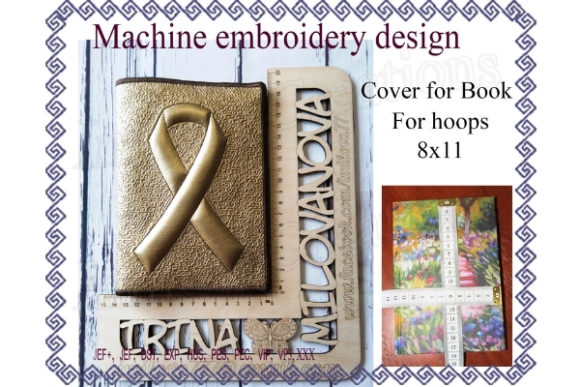
Book Cover Embroidery Design Review for Merch
As an embroidery designer who has spent years digitizing logos and testing files for commercial use, I approach every new machine embroidery design with a critical eye. It is not enough for a file to look pretty on a screen; it must perform under the needle, withstand washing, and elevate the brand it represents. Today, I am reviewing the Book Cover design, evaluating its potential for small business merchandise, branded patches, and custom apparel applications.
The Book Cover design arrives as a high-quality embroidery file ready for your next sewing project. With multiple embroidery file formats included, it offers flexibility for various machines. However, versatility in format does not automatically guarantee versatility in application. Let us dive into how this design holds up in real-world business scenarios.
First Impressions: Visual Personality and Brand Fit
Upon loading the Book Cover design into my digitizing software, the first thing I assess is its visual weight and style. Does it feel premium? Is it playful or serious? For a design titled Book Cover, I expect elements that suggest storytelling, knowledge, or classic elegance. This particular file strikes a balance between decorative and professional. It does not scream "loud retail," which makes it ideal for boutique brands, creative studios, bakeries, or florists that want to convey a sense of curated quality.
For small business owners, especially Etsy sellers and handmade product creators, the aesthetic of your design assets directly influences perceived value. A cluttered or poorly spaced design can make a finished product look cheap. The Book Cover design maintains clean lines and thoughtful spacing, suggesting a level of sophistication that works well for customer gifts, event merch, or upscale tote bag designs.
Real-World Applications for Small Business Merch
The true test of any digital embroidery file is its adaptability across different substrates. Here is how I envision the Book Cover design performing in a commercial embroidery setting:
- Embroidered Patches: This is perhaps the strongest use case. The design’s structure allows it to be scaled down for a chest patch or scaled up for a back patch without losing integrity. It serves as an excellent branded add-on for jackets or bags.
- Apron Embroidery: For cafes, bakeries, and floral shops, staff uniforms are walking billboards. The Book Cover design offers a refined look that enhances the professionalism of an apron without overwhelming the fabric.
- Tote Bag Design: Canvas totes are a staple for bookstores and boutiques. The design provides a focal point that encourages customers to carry their purchases proudly, extending your brand identity beyond the store.
- Cap Embroidery: While possible, this requires careful sizing. The curved surface of a cap front demands a design that is not too wide. If the Book Cover design has intricate horizontal details, it may need adjustment to fit the narrow hoop area of a standard cap.
Technical Considerations and Stitch Density
Before running a production batch, we must address technical constraints. The product description states that this machine embroidery design comes with multiple file formats, but it does not specify exact stitch counts or recommended hoop sizes. As a professional, I advise you to check these details before production.
Stitch density is crucial. If the design is too dense, it can cause puckering on lightweight fabrics like t-shirts or thin cotton aprons. Conversely, if it is too sparse, the fabric underneath may show through, especially on dark uniforms. I recommend testing the Book Cover design on a scrap piece of the actual fabric you intend to use. Pay close attention to thread colors and contrast. A low-contrast thread choice might render the details invisible from a distance, defeating the purpose of the branding.
Additionally, consider the stabilizer. For textured fabrics or items that will undergo frequent washing, such as work shirts or tote bags, using a cut-away stabilizer is often safer than tear-away to prevent distortion over time. Always confirm the recommended hoop size matches your machine’s capabilities to avoid re-digitizing or resizing errors.
Impact on Brand Identity and Customer Trust
Why does the choice of an embroidery file matter for your bottom line? Because consistency builds trust. When a customer sees the same high-quality Book Cover logo on your website, your packaging, and your staff’s aprons, it reinforces recognition. A sloppy or distorted embroidery job can undermine the perception of a handmade product, making it appear mass-produced or careless.
Using a well-digitized design like this one enhances the perceived value of your small business merch. It signals that you care about the details. For apparel decorators and product designers, this attention to detail translates into higher customer engagement and repeat business. A crisp, clean embroidered patch on a jacket feels premium; a jagged, poorly stitched logo does not.
Practical Designer Notes for Implementation
To ensure the best results with the Book Cover design, follow these practical steps before committing to a full run:
- Test in Black and White: Before selecting your brand colors, stitch out the design in black thread on white fabric. This reveals the structural integrity of the digitizing without the distraction of color.
- Check Small Patch Size: Scale the design down to the smallest size you plan to use. Ensure that fine details do not merge or become unrecognizable. If lettering is involved, verify it remains legible.
- Review Thread Color Contrast: Choose threads that stand out against your base fabric. High contrast ensures visibility, while low contrast can create a subtle, tonal effect if that suits your brand.
- Create a Printable Mockup: Use a printable mockup to visualize how the design looks on different items. This helps in client approval processes and marketing materials before you stitch a single thread.
- Confirm Commercial Licensing: Although the description mentions it is ready for your next sewing project, always double-check the license terms. Ensure you have the right to use the digital embroidery file for commercial sales, especially if you are selling the finished products rather than just using them for internal branding.
Final Verdict for Commercial Embroidery
The Book Cover design is a solid candidate for businesses looking to add a touch of elegance to their custom apparel and merchandise. It fits well within the Sewing and Embroidery niche for those who value quality over quantity. While it requires standard due diligence regarding stitch density and fabric compatibility, its versatility across patches, aprons, and totes makes it a valuable addition to any designer’s library.
Remember, the success of your finished product depends not just on the file, but on how you execute it. Test thoroughly, choose your materials wisely, and let the Book Cover design help tell your brand’s story with precision and style.